

Bledsoe-Miller STEAM Center Murals
Exploring Waco Through Science, Art, and Innovation
Spanning the exterior and eight interior graphic walls, these murals tell a layered story of Waco through a STEAM lens. Historical figures, scientific imagery, and cultural references come together to reflect the city’s legacy of learning, innovation, and creativity.

Science, Art, and Community Along the Brazos
The murals at the Bledsoe Miller STEAM Center are designed as a unified visual experience, unfolding across both the exterior and the interior of the building. Outside, large scale artworks introduce the STEAM Center as a place of curiosity, discovery, and innovation rooted in Waco’s history and future. Inside, eight immersive graphic walls extend that story, blending science, technology, engineering, arts, and math with local culture, landmarks, and influential figures. Together, the interior and exterior murals create a continuous narrative that connects the Brazos River setting, the building’s architecture, and the community it serves, inviting visitors of all ages to explore how creativity and knowledge intersect in Waco.
Exterior STEAM Center Murals
Scan with your phone

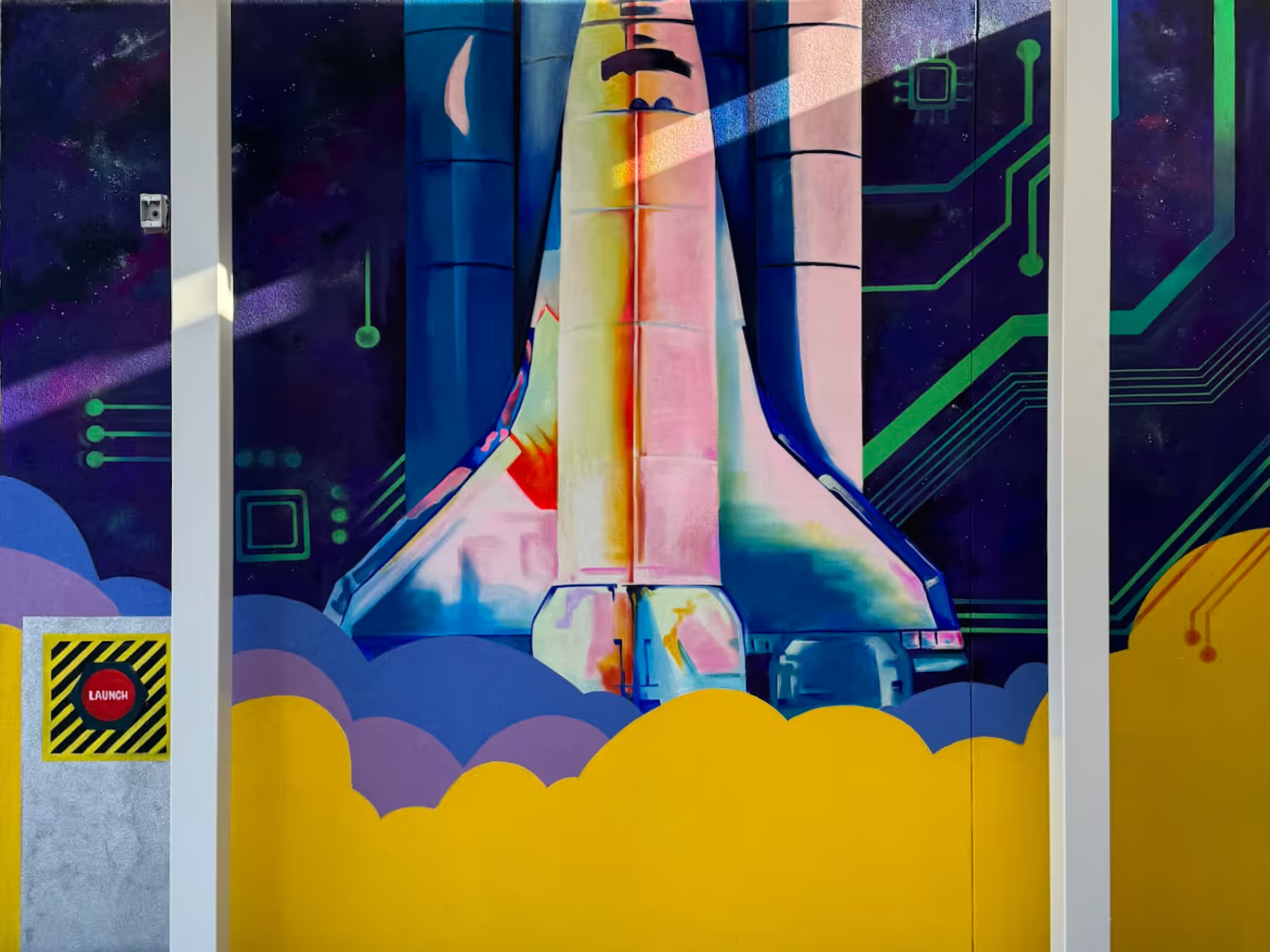
This mural reflects Central Texas’s connection to space innovation, including nearby rocket testing and manufacturing, while also serving as a metaphor for education itself: an invitation to take risks, ask questions, and imagine what’s possible.
Scan with your phone

Scan with your phone


Scan with your phone

Scan with your phone

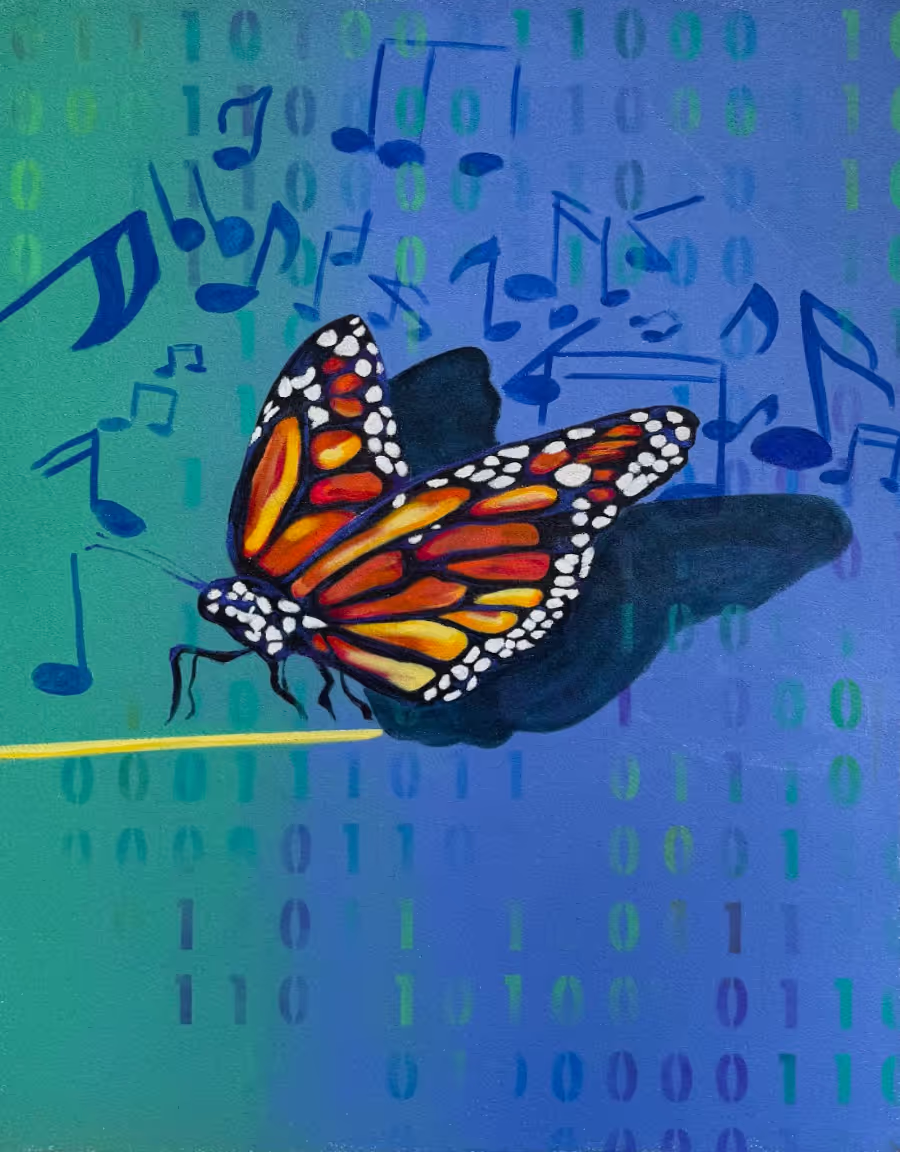
Behind the hands, binary code references science and technology, while musical notes echo Bledsoe’s legacy, blending art, music, and STEM into a single visual narrative.
Meet the artists
.avif)
Michelle Wilson creates site-specific murals inspired by native plants, wildlife, and pollinators. Her work blends botanical illustration with bold, graphic design to create immersive environments that reconnect viewers with nature. Through oversized forms and vibrant color, Michelle invites audiences to slow down, look closer, and rediscover a sense of wonder within the natural world.
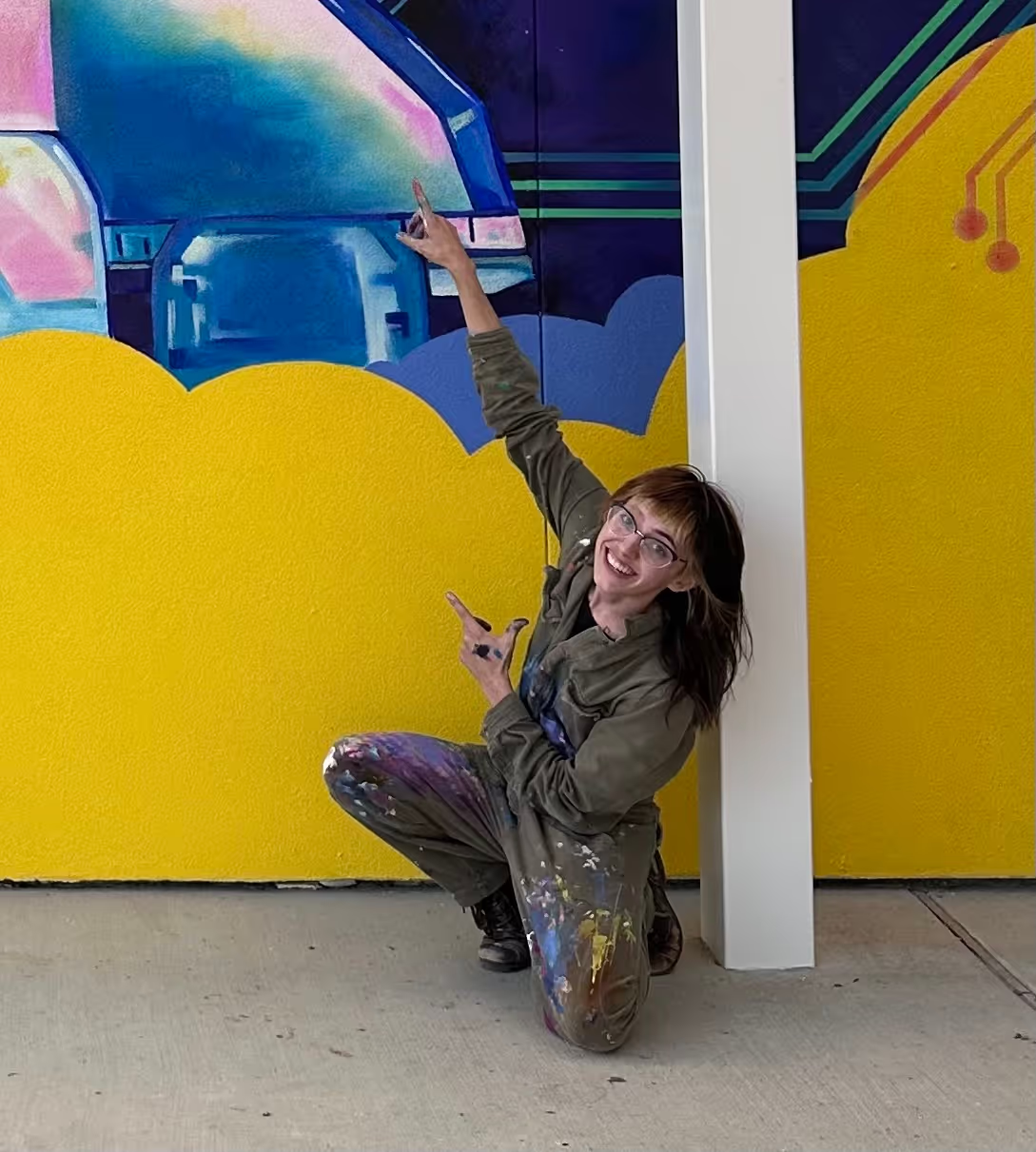
Allie Walker is a Texas-based visual artist known for expressive color, dynamic composition, and movement-driven design. Her work celebrates the energy of flora and fauna, using color theory to create spaces that feel alive, joyful, and welcoming. Community engagement and collaboration are central to her practice, bridging art, environment, and people.
Interior STEAM Center Murals
Created in collaboration with two local designers, these murals are more than decoration—they are visual storytelling. Each panel highlights a distinct STEAM-related theme, connecting past and present innovators, makers, thinkers, and artists whose ideas and helped shape the world and continue to inspire future generations.
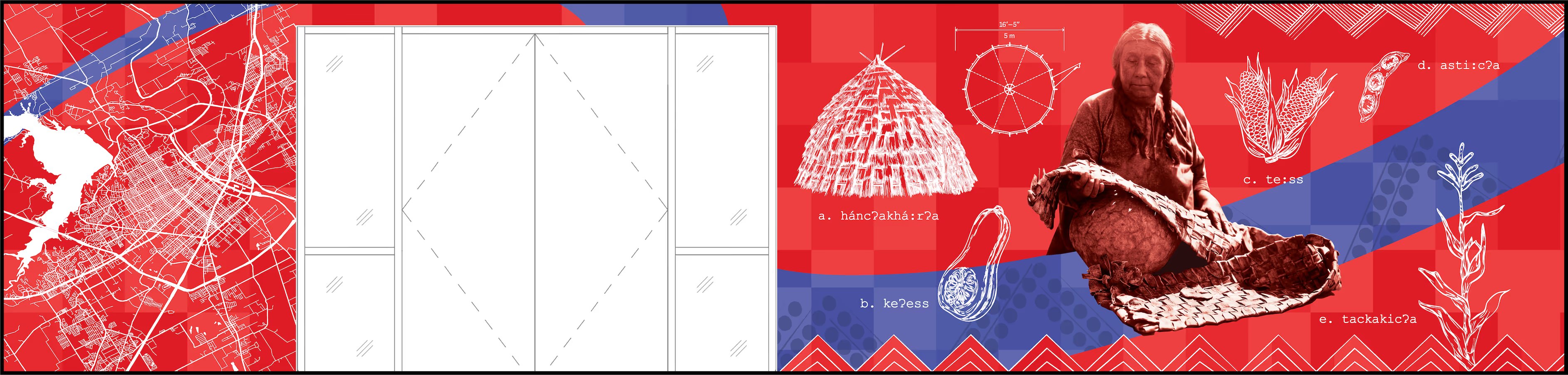
With thanks to the Wichita and Affiliated Tribes for their guidance on the history, language and technology represented in this panel. You can learn more about the living culture of the descendants of the Waco people at https://wichitatribe.com/department-of-preservation/
What you can see
A modern map of Waco and an elder from the Waco tribe, with indigenous technologies from life along the Brazos River before European colonization. You’ll see a grass house, woven baskets and pottery designs that were part of an ingenious system of underground food storage, and the “Three Sisters” plants—corn, beans, and squash—woven together with the Brazos River.
Why it matters
Waco exists here because of the Brazos River and its natural crossing. Long before roads, railways, or bridges, this place was already a center of movement, trade, and cultural exchange.
The bigger picture
Indigenous communities developed sophisticated technologies by closely observing the land, water, seasons, and plants. Homes were built from local grasses, food was carefully stored to last through harsh weather, and crops were planted together so each helped the others thrive. These systems weren’t accidental—they were tested, refined, and passed down over generations. This panel reminds us that technology begins with knowledge, creativity, and care for place. Language is also both a technology and an art. The language spoken by the Waco people is still being passed down to the next generation. Here you can see and hear words that would have been spoken hundreds or even thousands of years ago in this very place.
Listen & learn
Fun facts
- The city of Waco is named for the Waco people, now part of the Wichita and Affiliated Tribes.
- Underground food storage helped protect harvests from both heat and freezing temperatures.
- The Three Sisters planting system naturally improves soil and reduces pests.
Family questions
Why do you think rivers have always attracted people and communities?
Have you ever eaten something you grew from a seed?
Do you know any words in more than one language?
What you can see
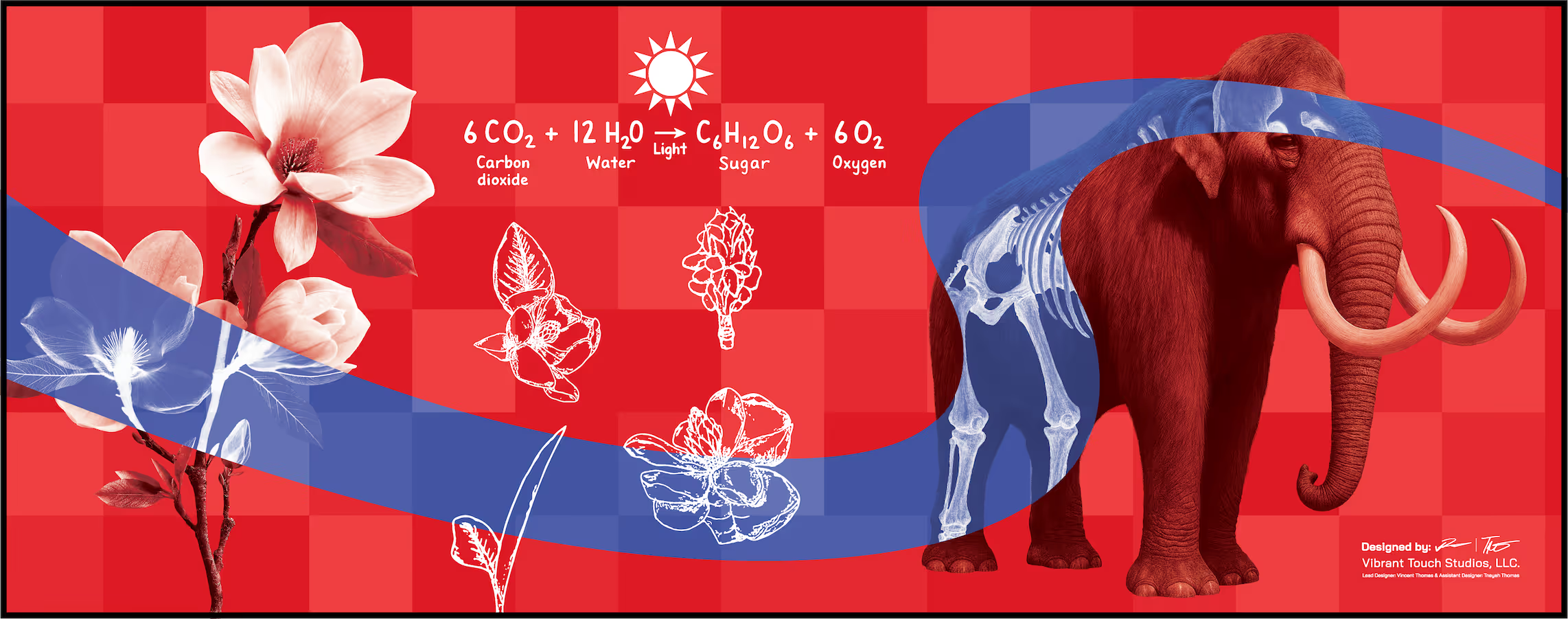
An view of the Brazos River revealing x-ray glimpses of the inside of a magnolia flower and the skeleton of a Columbian mammoth. You can also see botanical diagrams of the life cycle of a magnolia tree, and at the top, a diagram describing photosynthesis.
Why it matters
Photosynthesis is the process that turns sunlight, which is a form of electromagnetic energy, into energy for plants to grow. Nearly all life (plants, animals, and people) depends on it. We think of solar power as a modern technology, but it’s also one of the very oldest sources of power. We get powered by the sun every time we eat fruit or vegetables. X-ray technology uses a different part of the electromagnetic spectrum with shorter wavelength, and allows us to see inside a plant or animal because it passes through soft tissue but is absorbed by denser materials like bones.
The bigger picture
The fertile river landscape around Waco has supported life for millions of years. Plants capture sunlight and turn it into food. Animals feed on those plants, and humans depended on both. Magnolia trees, which still grow here today, are living reminders of ancient ecosystems as well as a reminder that Waco is growing and changing today. Columbian mammoths once roamed this region, and you can see their bones and learn their story at the Mayborn Museum and the Waco Mammoth National Monument.
Fun facts
- Photosynthesis is the foundation of most food chains on Earth.
- Magnolias existed before bees and were pollinated by beetles.
- Mammoths lived in Central Texas during the Ice Age.
Family questions
How does sunlight travel from the sun all the way to your plate of food?
Have you seen the mammoth bones found in Waco?
Have you ever seen an x-ray? What did it show you?
What you can see
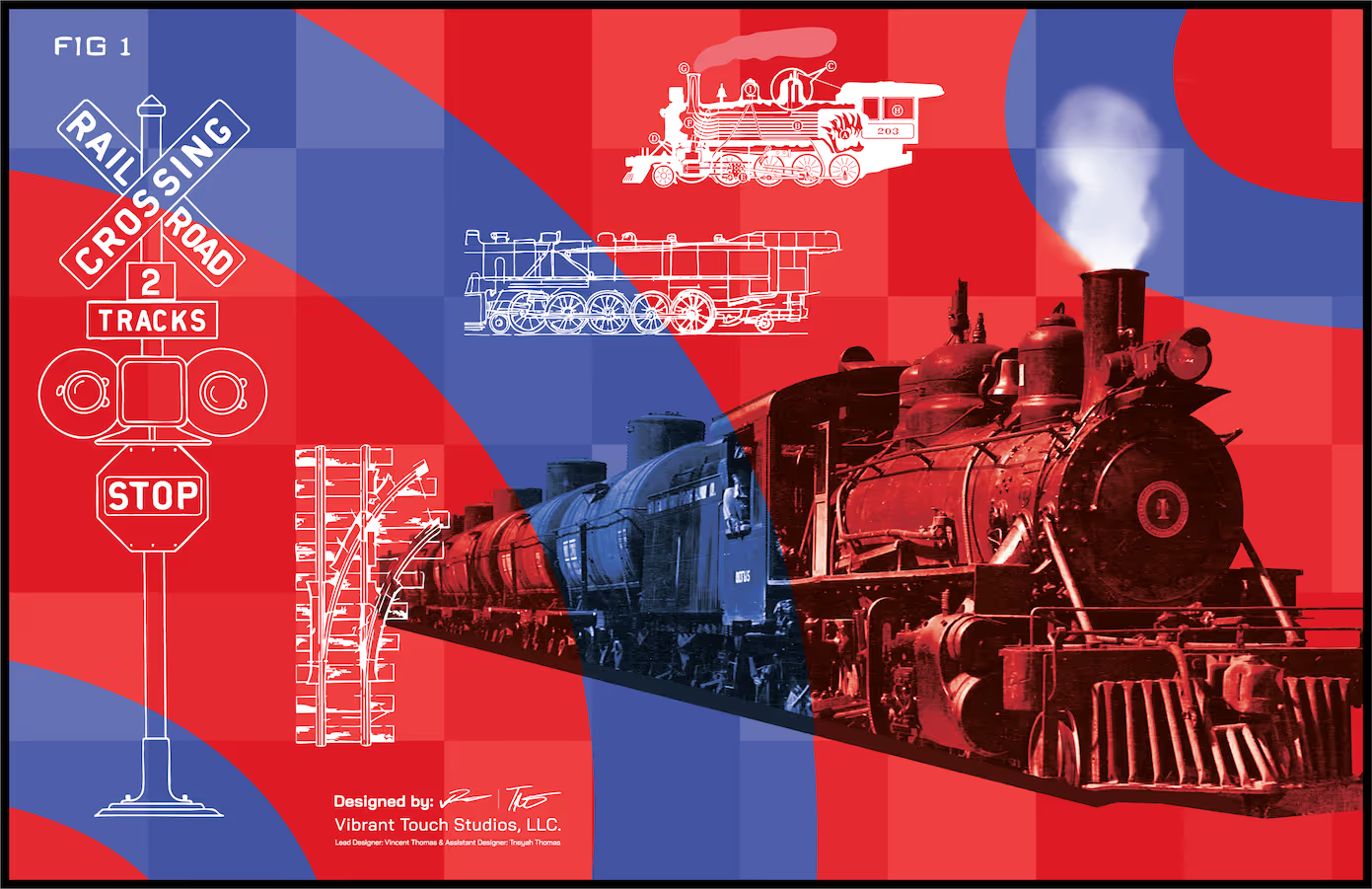
A steam locomotive that would have been a familiar sight in Waco in the late 19th and early 20th centuries. You can see a diagram showing how a steam engine works, some railroad track and switches, and a signal for a railroad crossing.
Why it matters
Steam power transformed how people moved, worked, and connected. When people could travel faster than a person or a horse, they could go further and transport people, food, and supplies. Railroads reshaped Waco and linked it to the wider world.
The bigger picture
Before trains, travel was slow and limited by distance. Steam engine technology turned heat into motion, allowing trains to carry people and goods across vast landscapes. As rail lines expanded, Waco became a hub of activity—full of arrivals, departures, and new possibilities. This panel shows how engineering innovation can change daily life.
Fun facts
- Steam engines use boiling water to create motion.
- Railroad switches allow trains to change direction safely.
- Train depots and stations were once among the busiest places in our city.
Family question
If trains had never been invented, how do you think cities would look today?
Have you ever experienced a train going through a railroad crossing? How did it sound?
Why don’t we use steam locomotives any more?
What you can see
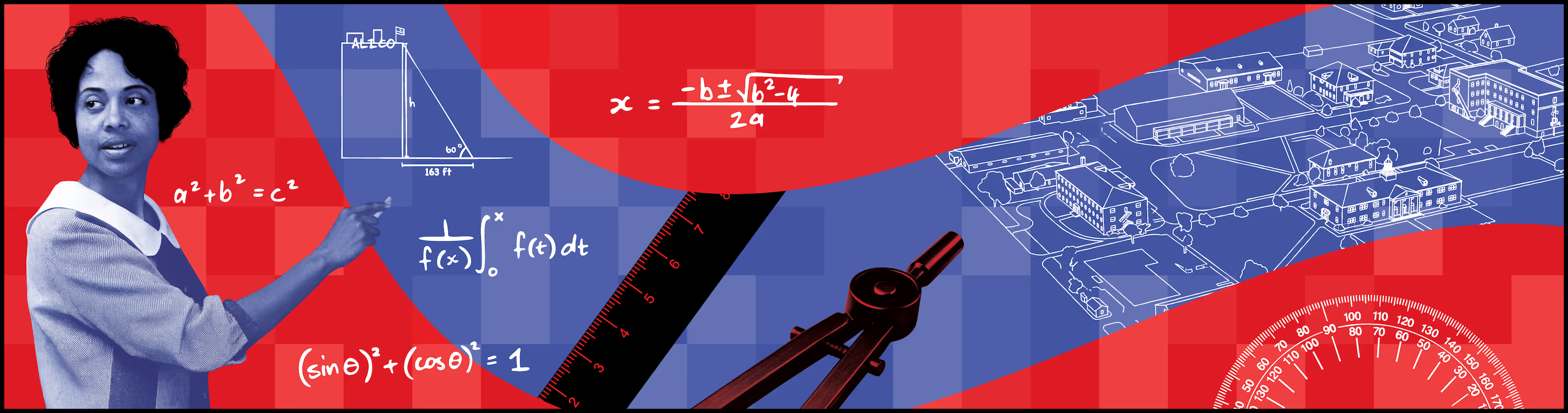
A photograph of trailblazing Waco-born mathematician, Dr. Vivienne Malone-Mayes, along with hands-on math puzzles involving triangles, angles, equations, and visual proofs. Also featured is a bird’s eye view of historic Paul Quinn College campus in Waco.
Why it matters
Math teaches problem-solving, persistence, and confidence. Dr. Vivienne Malone-Mayes used math to open doors—for herself and for others. Paul Quin College was
The bigger picture
Growing up in segregated Waco, Dr. Malone-Mayes learned early that opportunity was not equal—but she also learned that education could be powerful. Through determination and excellence, she became a trailblazing mathematician and beloved professor. She was the first African American Professor at Baylor University, where she taught for over 25 years. The puzzles in this panel reflect her belief that math should be explored, questioned, and understood—not feared. Paul Quinn College in Waco was one of the historically black colleges and universities, and provided access to education and opportunity when other doors were closed. Although the college moved to Dallas, its historic Waco campus continues today as a place of learning for new generations as the Rapoport Academy’s Meyer High School.
Fun facts
- Dr. Malone Mays was the fifth African American woman in the U.S. to earn a PhD in mathematics.
- Students consistently praised her teaching and mentorship.
- Many of the puzzles here come from topics she taught in class.
- Did you know that Waco was once known as the “Athens on the Brazos” because it had so many colleges?
Family question
What kind of problem would you like to solve using math?
Can you figure out how you would calculate the height of the Alico building from the diagram shown?
Waco is still home to three colleges. Can you name them?
What would you like to study in college?
What you can see
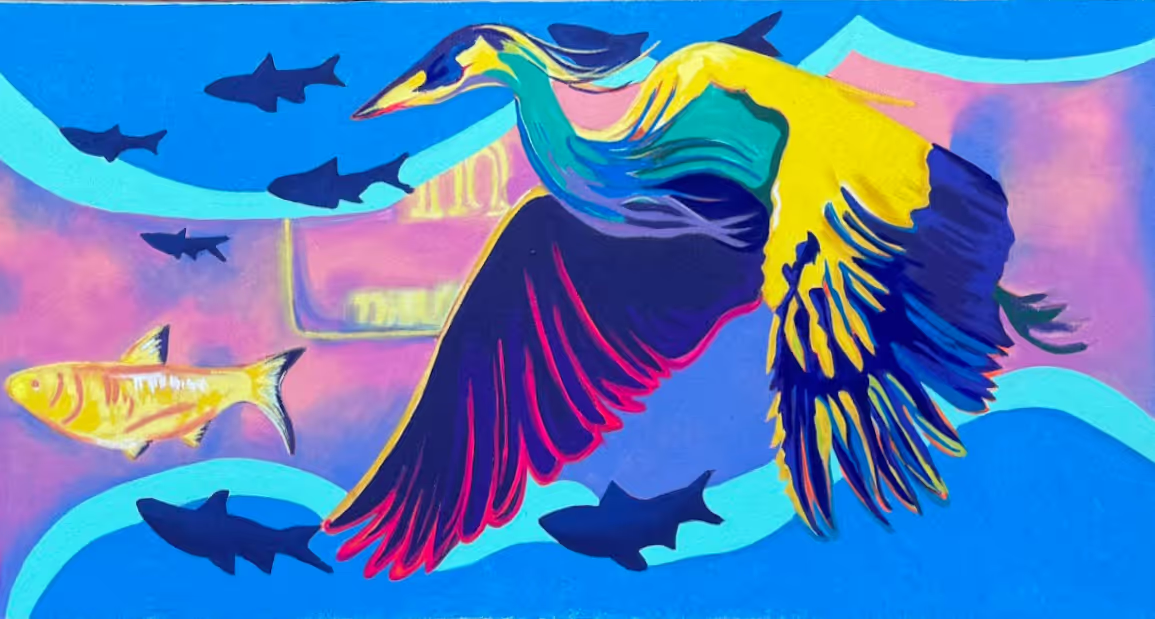
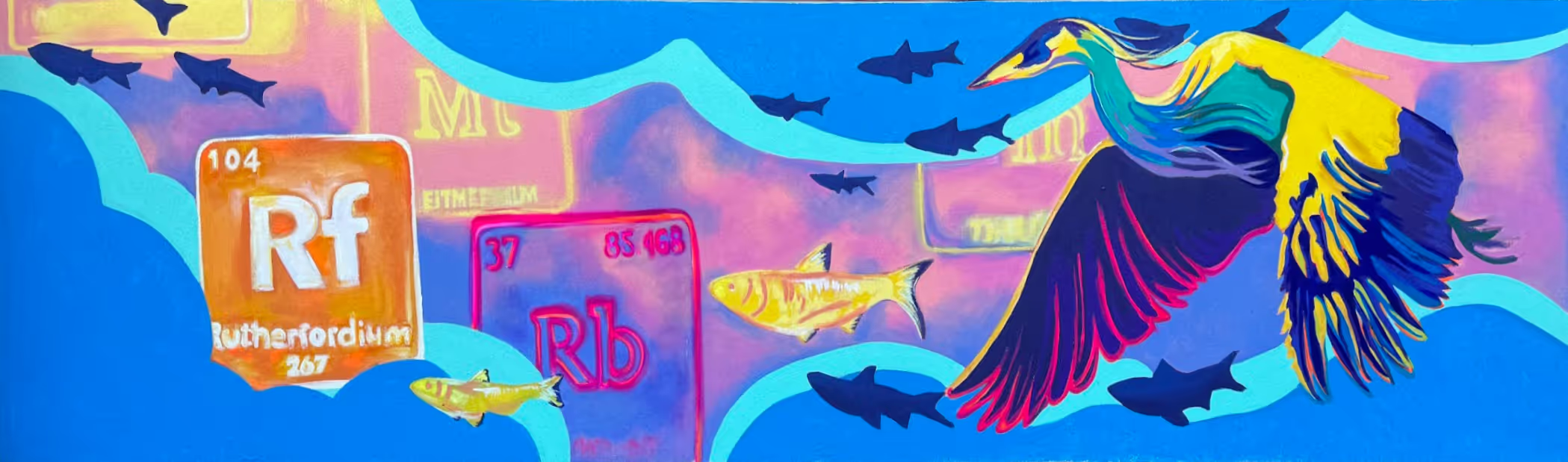
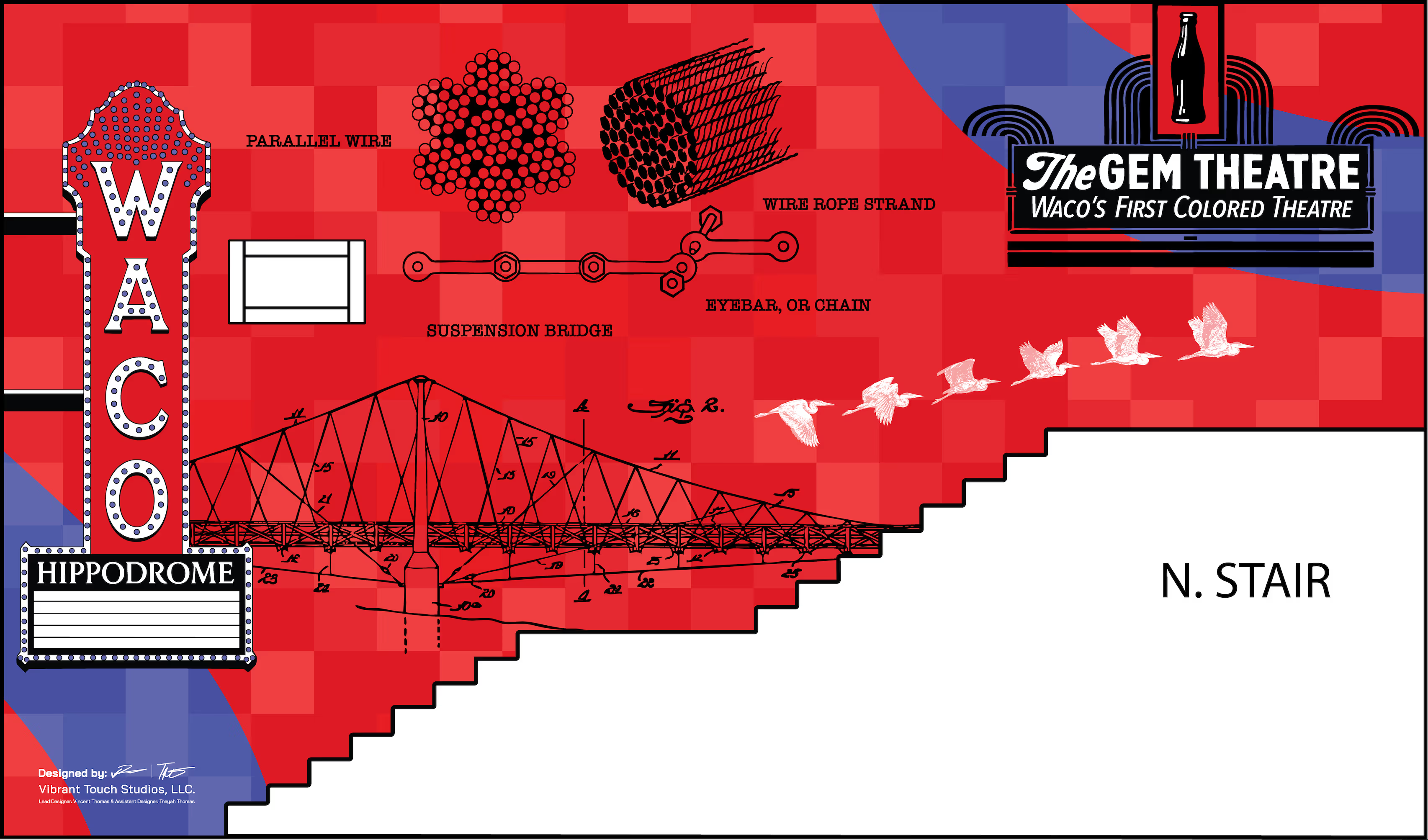
The Waco Suspension Bridge, a detailed view of its cables, the historic Waco Hippodrome and Waco Gem theaters on either side of the river, and a blue heron shown in stages of flight.
Why it matters
The Waco suspension bridge tested new engineering ideas that influenced major suspension bridges across the country. It also accelerated Waco’s growth by making it a safe river crossing for cattle drivers taking their herds up the Chisholm trail. The two theatres were both part of a lively arts and entertainment scene in Waco that sprung up around this growth, making Waco a hub for festivals, events and the arts.
The bigger picture
Built in 1870, the Waco Suspension Bridge demonstrated how many small parts could work together to support great weight. The nearby theaters remind us that bridges connect not just land, but culture and community. The blue heron echoes this idea—flight, like engineering, depends on balance, coordination, and teamwork.
Fun facts
- Suspension bridge cable is made from hundreds of small wires all twisted together, making it both strong and flexible.
- The Waco Suspension Bridge design helped inspire other landmark bridges
- Blue herons require a running start to lift off.
Family questions
What other systems rely on many small parts working together?
Have you ever seen a blue heron taking flight along the riverbank?
Who crosses the Waco Suspension Bridge today?

What you can see
Doris Miller, the Naval Cross, diagram of a Boeing B-17 Flying Fortress, a jet engine cutaway, and a group of F-16 fighter jets.
Why it matters
Courage, preparation, and quick thinking can change history.
The bigger picture
Raised doing hard physical work with his sharecropping family just outside Waco, Doris Miller learned strength, responsibility, and how to respond to the unexpected. During the Japanese attack on Pearl Harbor on December 7, 1941, those skills helped him act decisively; saving lives and defending his ship. The aviation imagery shows how science and engineering support people in moments when decisions matter most.
Fun facts
- Doris Miller was the first African American to receive the Naval Cross.
- Jet engines create thrust by pushing air backward.
- Students can study aviation and flight at Texas State Technical College in Waco today.
Family questions
What skills do you think help people stay calm in emergencies?
Have you ever got an award for something you did well? How did it make you feel?
What award would you give to someone if you could?
Who is someone that you think is brave?

What you can see
The Waco-born composer and singer, Jules Bledsoe with a piano keyboard, sound recording technology and musical notation for the song “Lift Every Voice and Sing”.
Why it matters
Music blends creativity with science, math, and technology. It is also one of the most powerful ways that people express themselves and connect with each other.
- The bigger picture
- Born in 1898, Jules Bledsoe became a national and international star at a time when opportunities like that were rare for African American artists. He showed that his singing talent could carry stories, culture, and emotion far beyond Waco. He was especially famous for singing “Ol’ Man River” in the musical film Show Boat. His compositions and papers are preserved today in the archives at Baylor University. Music depends on patterns, vibrations, and precise timing. If you know a note’s frequency, you can calculate its pitch. Change the vibration, and the note changes. That’s physics at work—right inside music. This panel connects historic performance to modern tools used to record, mix, and amplify sound today.
Fun facts
- Musical notes are vibrations measured in frequency.
- Piano keys follow a repeating mathematical pattern.
- Recording turns sound into data.
- Lift Every Voice and Sing was a hymn written by NAACP leader James Weldon Johnson in 1900. His brother John (1873-1954), composed the music. It became a famous anthem of the American Civil Rights movement.
Family questions
How does technology change the way music is made and shared?
What’s your favorite song? Can you sing it?
What musical instrument would you like to learn if you could choose anything?
Do you know the song “Lift Every Voice and Sing?”
What you can see
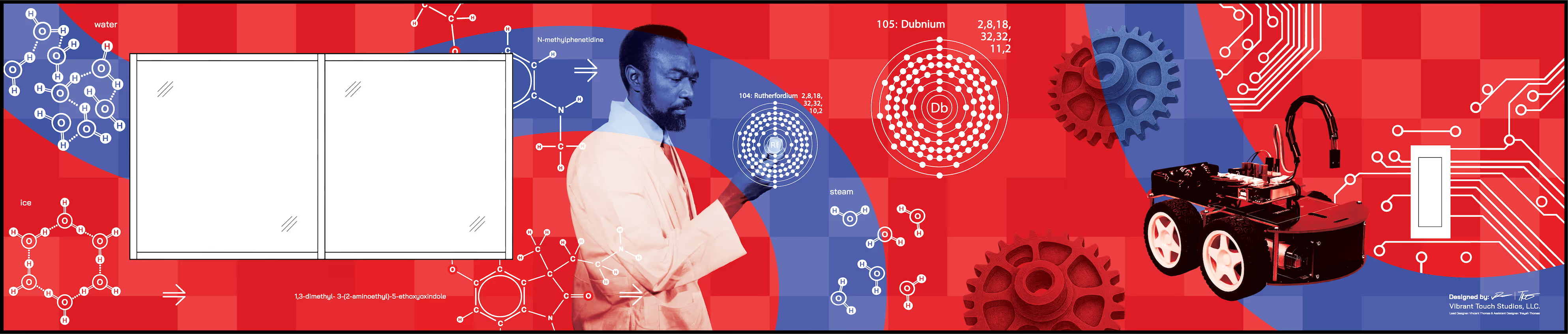
Waco-born Chemist James Andrew Harris, with elements Dubnium and Rutherfordium on the periodic table, molecular structures, diagrams of water in solid, liquid, and gas forms, electronic circuits, and FRANK, a locally built robot developed by students at Texas State Technical College
Why it matters
Scientific discovery expands what we know and helps us understand the world and solve problems. One problem for Cameron Park Zoo was how to clean up huge amounts of large animal poop every day. The robot FRANK - Fecal Remover And Nastiness Killer - was developed by students at Texas State Technical College and helps clean large animal habitats. It’s a real example of engineering solving real-world problems, right here in Waco.
The bigger picture
James Harris helped discover two new elements, 104: Rutherfordium and Element 105: Dubnium,
changing the periodic table itself. He did this through patience, precision, and persistence, even when faced with discrimination. After his discoveries, Harris dedicated himself to mentoring and inspiring young scientists. He traveled widely, encouraging African American students to pursue careers in science. His legacy is not just what he discovered, but who he helped lift up.
Fun facts
- Harris co-discovered elements 104 and 105.
- Water behaves very differently as ice, liquid, and vapor.
- Robotics combines chemistry, physics, and engineering.
- An adult elephant produces 220 to 330 pounds of dung per day
Family questions
What discovery or invention do you think will shape the future?
Do you weigh more or less than a day’s worth of elephant dung?
What do you see when water turns from liquid to gas?
Is solid water heavier or lighter than liquid water? (hint: does ice float or sink in a glass of water?)
Meet the artists
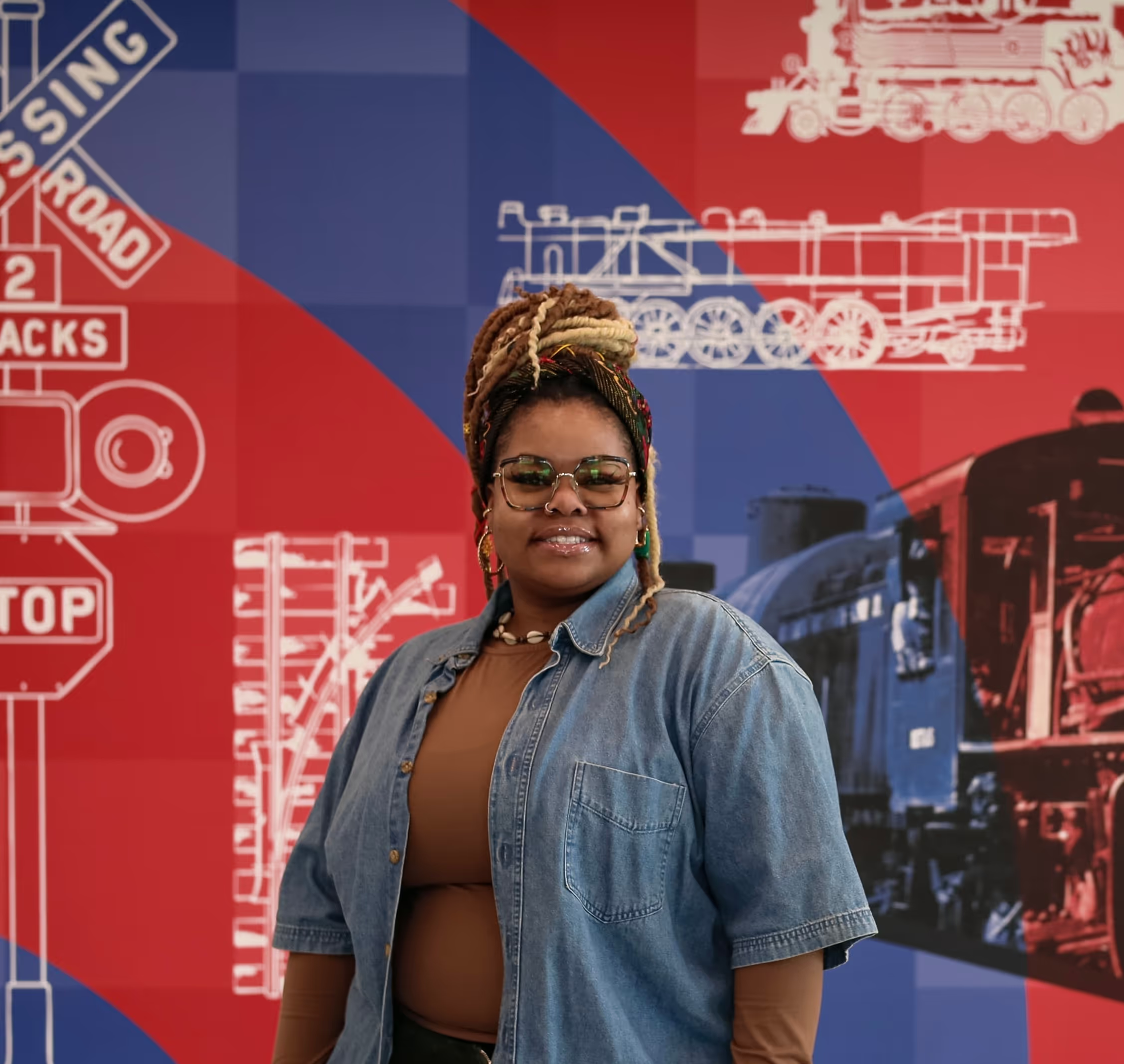
Based in Waco, Texas for the past ten years, Tneyah is a multidisciplinary artist and designer whose work is guided by culture and intention rather than medium. With early training at the Fort Worth Academy of Fine Arts and a background in multimedia design, she centers cultural nuance and connection through visual work. Graphic design forms the foundation of her practice, with fiber arts and music serving as expressive extensions. Her work focuses on preserving stories and translating complex ideas into visuals that feel honest and connected to the communities they reflect.
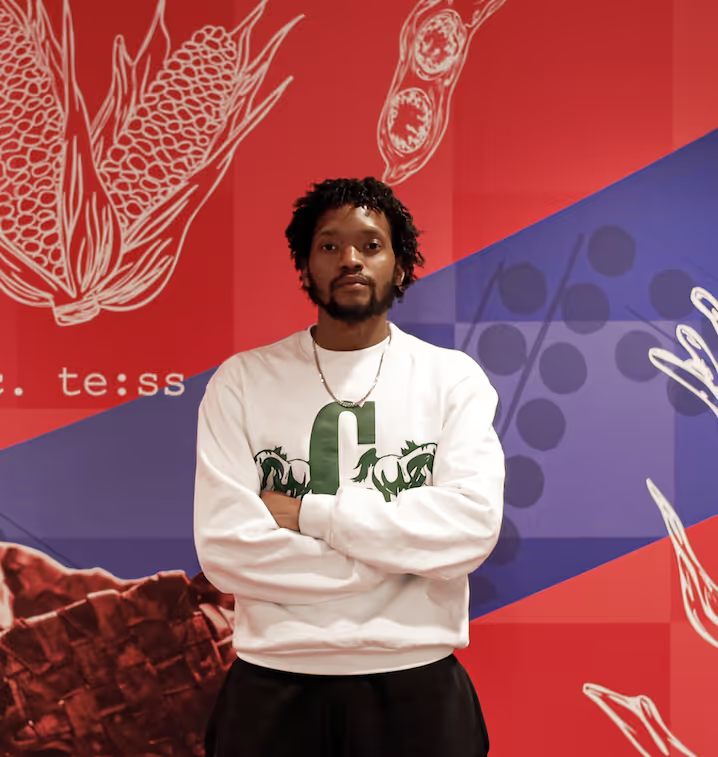
Vincent Thomas is an artist and designer from East Waco, Texas, whose work centers on representation, memory, and public presence. Through design, painting, and large-scale murals, he creates images that honor Black and Brown communities with care and clarity. His work often places figurative portraiture within symbolic environments such as gardens, classrooms, and civic interiors. These spaces serve as sites of learning, growth, and collective history, grounding personal narrative within shared experience.